A guide for parents and carers
SATPIN Phonics: Sounds, Words and Simple Activities
SATPIN stands for six letters: s, a, t, p, i and n. Learning the sounds these letters represent gives children a starting point for reading words such as sat, tap and pin.
By Geared Kids · Practice from our first four lessons
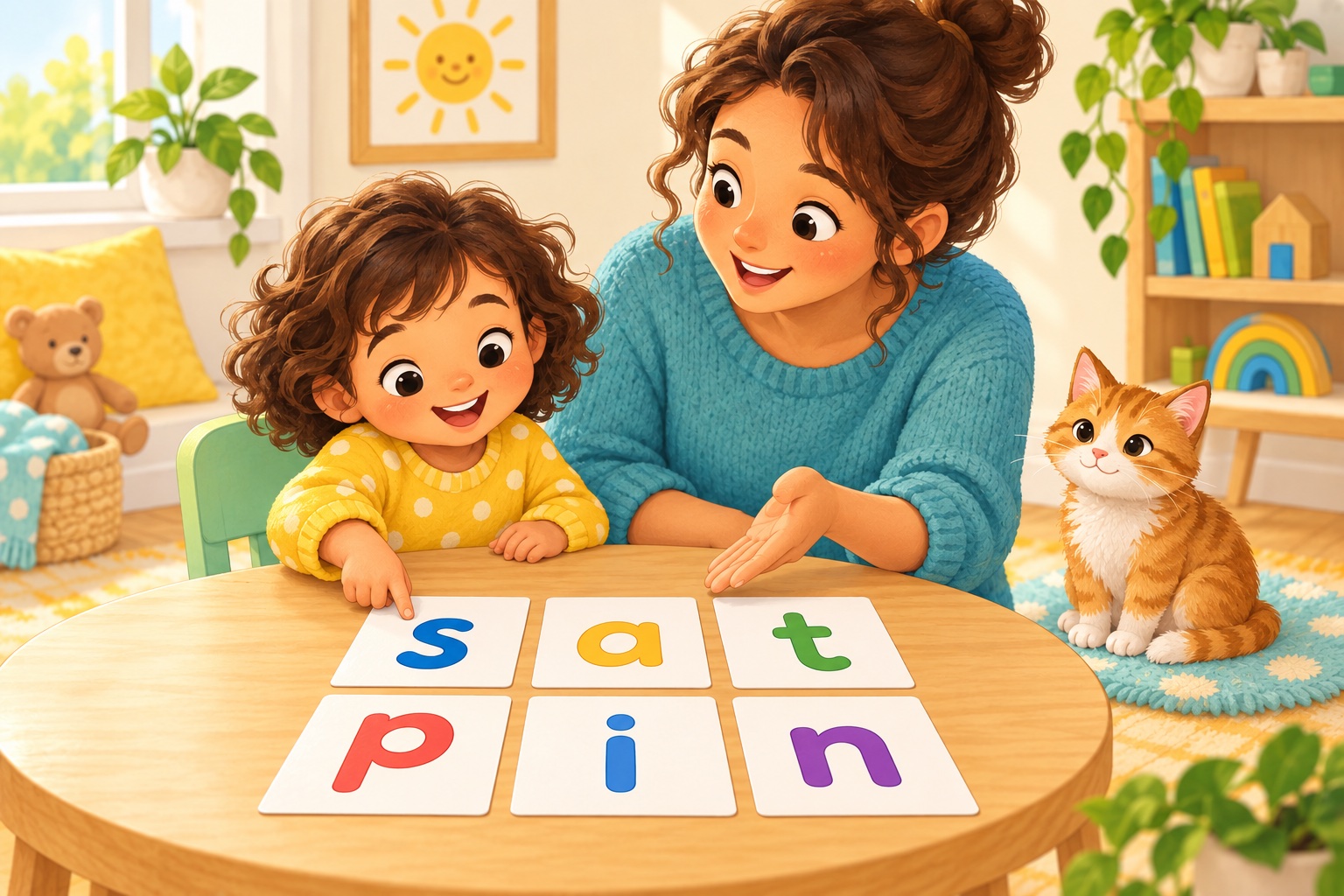
You can practise these letters together through listening, matching sounds to letters and building short words. This guide follows the opening lessons in Phonics for Kids, with activities you can also try using paper letter cards.
What is SATPIN?
SATPIN is a useful early group of letters because children can combine them to make several words without learning the whole alphabet first.
Once your child knows the sounds represented by s, a and t, you can show how those sounds come together to make sat. Adding p gives you pat and tap. Later, i and n let you build words such as pin, tin and nap.
Schools use different phonics programmes and teaching sequences. If your child is learning phonics at school, ask which sounds they are practising so you can support that learning at home.
Which sounds should we practise?
When reading these first words, use the sounds represented by the letters.
| Letter | Practise the sound heard in… |
|---|---|
| s | The beginning of sat |
| a | The middle of sat |
| t | The beginning of tap |
| p | The beginning of pin |
| i | The middle of pin |
| n | The beginning of nap |
Keep consonant sounds clear and avoid adding an extra “uh”: say a short /t/ rather than “tuh”, for example. Listening to a demonstration can help; Oxford Owl's pronunciation videos include examples of the sounds.
In the app, each letter introduction plays its sound, shows a supporting picture and plays the sound again.
How our app introduces SATPIN
The first four lessons introduce new letters alongside opportunities to use them.
| Lesson | What your child practises |
|---|---|
| 1 | Meet s, a, t and p, match sounds to letters, and build sat. |
| 2 | Practise s, a and p, build pat and tap, and choose between written words such as sat, pat and tap. |
| 3 | Meet i and n, match their sounds to letters, build pin and pan, and find pin among word choices. |
| 4 | Practise n and p, build tin, sip and nap, and find spoken words among written choices. |
New letters and familiar words appear together, giving children opportunities to revisit what they have already encountered.
Three SATPIN activities to try together
1. Hear a sound and find its letter
Write s, a and t on separate cards. Say one sound and ask your child to point to the matching letter.
Move the cards around before trying again. Add more letters as your child learns them.
This mirrors the app's sound-matching activity: your child hears a sound and taps the matching letter. They can use the replay button to listen again.
If they are unsure, demonstrate the answer, repeat the sound together and have another go.
2. Build a word, one sound at a time
Start with sat and the three letter cards s, a and t. Say the word, then help your child listen for its sounds:
- “What sound can you hear first in sat?”
- Choose s.
- Listen for the next sound and choose a.
- Finish with t.
- Point along the completed word and blend the sounds together.
The app's word-building activity works in a similar way. Your child hears the whole word and individual sound hints, then taps scrambled letters in the correct order. Each correct letter moves into place, and the completed word is spoken again.
After sat, try pat or tap. Once i and n have been introduced, try pin and pan.
3. Listen and find the word
Write sat, pat and tap on three cards. Say one word and ask your child to find it.
Encourage them to look through the letters and sound out their choice. Rearrange the cards between turns.
This mirrors the app's word-choice activity, where your child hears a word and selects it from written options.
You can also pick up one card and ask your child to try reading it without hearing the word first. Offer help if needed, then read it together.
SATPIN words from the app's opening lessons
These eight words appear in the first four lessons:
| Words with a | Words with i |
|---|---|
| sat, pat, tap, pan, nap | pin, tin, sip |
Choose a small selection using letters your child already knows. There is no need to practise the whole list in one sitting.
For reading practice, change the order and encourage your child to work through the sounds each time.
What if my child knows the sounds but cannot read the word?
Recognising individual letter sounds and blending them into a word are different things to practise.
Show your child how you do it: point to each letter in sat, say its sound, then bring the sounds together and say sat. Let them join in with you before asking them to try alone.
You can also try a listening game without written letters: say the sounds in sat and ask, “What word can you hear?” Our guide to blending first words has a worked example and more ideas.
Keep practice brief and encouraging. If your child continues to find it difficult, their teacher can help you choose a suitable next step.
What comes after SATPIN?
In our app, lesson five introduces m and d, with word-building activities for map and mat. Familiar letters return in new words as the lessons continue.
If your child attends school, keep following their school's guidance alongside home practice. Little Wandle's parent resources are another example of programme-specific pronunciation and teaching support.
Further reading for parents
The app examples above follow our first four lessons. These resources explain the underlying phonics skills.