
A guide for parents and carers
Helping children blend their first words
Knowing separate letter sounds and putting them together are different steps. Show your child how you join the sounds, then try a short word together.
By Geared Kids · Everyday practice ideas
What does blending mean?
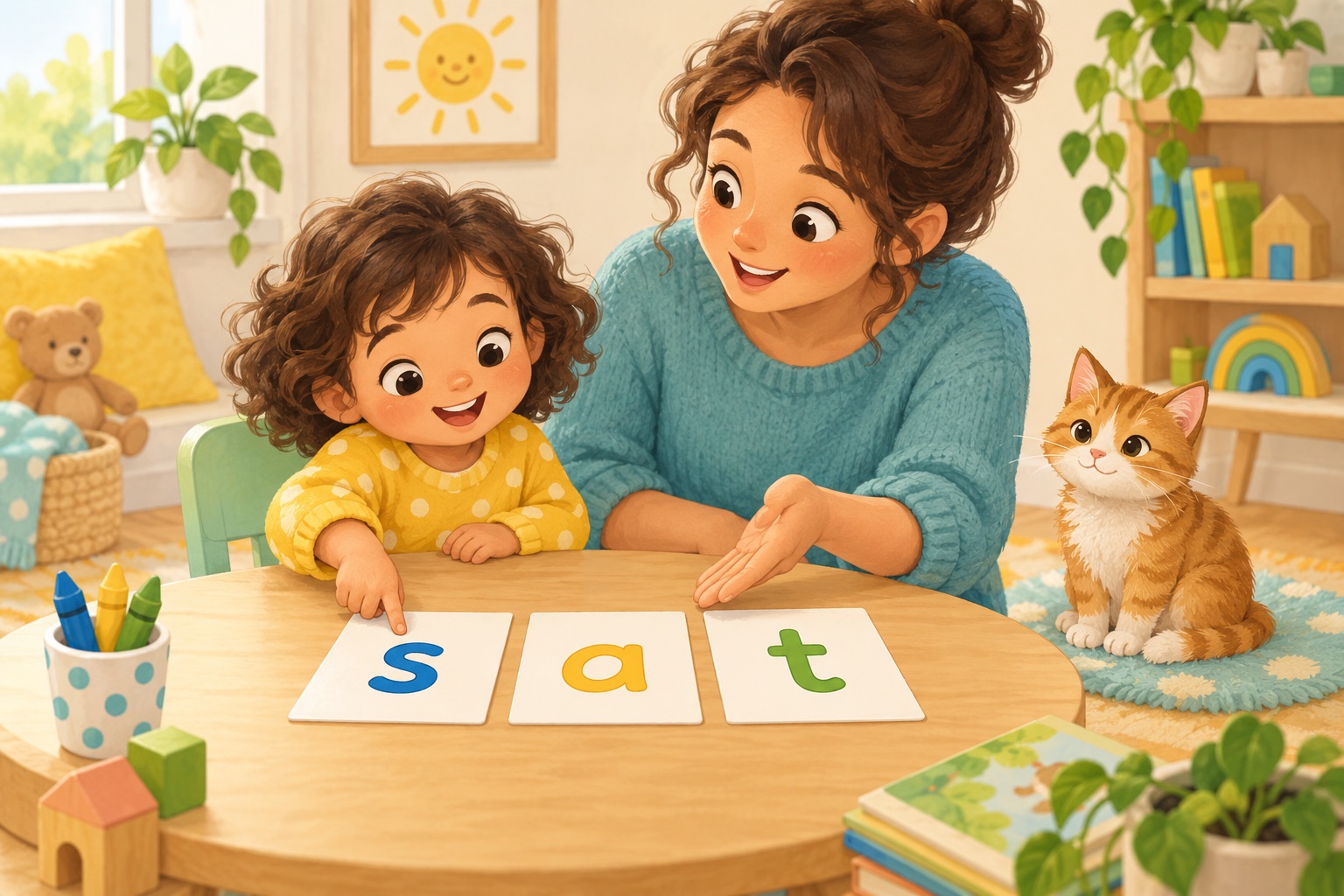
Blending means joining sounds to say a word. For example, /s/ /a/ /t/ can join to make sat. Saying “ess, ay, tee” gives the letter names, which does not produce the same blend.
Start with words made from sounds your child knows. In this example, a is the short sound in sat, not its alphabet name. If those sounds are unfamiliar, return to letter-sound practice first.
Work through one word together
- Write the word. Put sat on paper in clear lowercase letters, with enough room to point to each one.
- Model it first. Move your finger from left to right as you say the sounds. Stretch /s/ into the vowel, then add the short /t/ sound.
- Say the whole word. Bring the sounds together and say “sat”. Use it in a sentence: “The cat sat.”
- Let your child try. Point again and invite them to join you. If they need help, repeat your example before trying another word.
When that example feels familiar, you could change the first letter to make mat, if /m/ is already known. Changing one letter gives you something concrete to talk about: what stayed the same, and what changed?
When the sounds stay separate
If your child says each sound but cannot yet hear the word, model the blend again with smaller gaps between sounds. Keep consonants clear: adding “uh” after each one makes an extra sound to work around.
You can also try a listening game without written letters. Say /s/ /a/ /t/ and ask which word they hear. This is oral blending; reading a written word adds the step of recognising its letters. Reading Rockets offers more oral sound and blending activities.
If the activity becomes frustrating, finish with something familiar. Ask your child's teacher for a suitable word or reading book rather than introducing harder spelling patterns to make the exercise longer.
Carry the word into everyday reading
Look for a familiar word in a reading book that matches the sounds your child has learned. Model sounding it out, then talk about what the sentence means. Reading practice also includes enjoying a story together.
The word-building and blending activities in Phonics for Kids offer another place to practise. After an activity, write a familiar word on paper and try reading it together. Choose a small amount of practice that still feels enjoyable.
Further reading for parents
These resources explain the underlying phonics skills. The activities and examples above are suggestions from Geared Kids.