
A guide for parents and carers
How to practise letter sounds at home
Start with a sound your child already knows. You can practise listening and matching with a piece of paper, a familiar object and a little conversation.
By Geared Kids · Everyday practice ideas
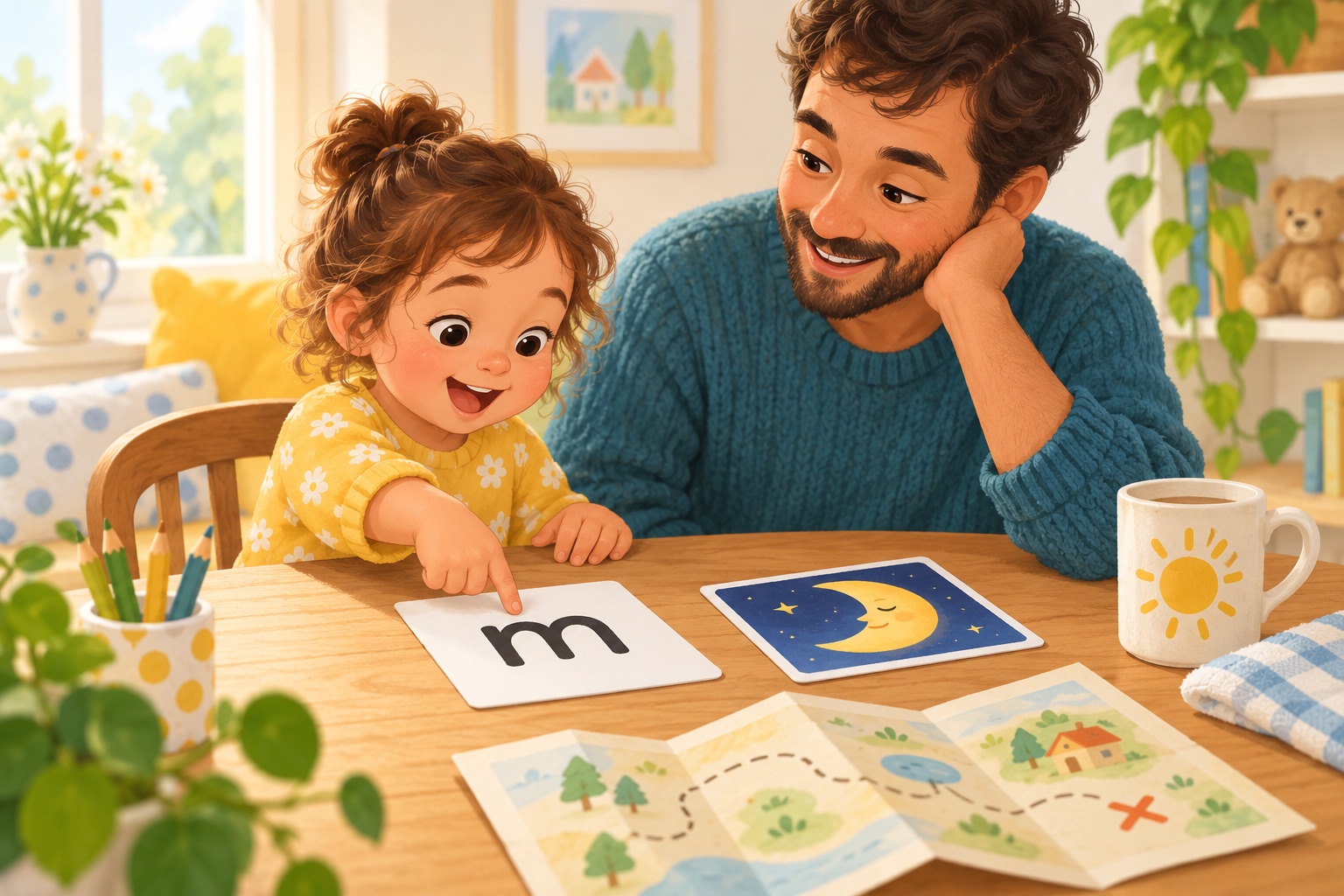
Letter names and letter sounds do different jobs
The name of the letter m is “em”. Its sound in map is /m/, which you can stretch as “mmm”. When you are practising reading a word, use the sounds rather than reciting the letter names.
Letters can represent different sounds in different words. For a first activity, use one familiar example at a time. If your child is learning phonics at school, ask which sounds they have covered and use the school's examples.
Try a little /m/ sound hunt
This is an example activity you can adapt to the sounds your child knows.
- Listen first. Say “mmm” together, then say map. Ask: “Can you hear that sound at the start?”
- Choose two things. Put a map and a sock in front of you, or draw them. Name both together. Ask which word begins with /m/.
- Show the letter. Write a lowercase m on paper. Say its sound while pointing to it, then let your child point and try.
- Take a turn. Your child can choose the next object for you to name. You might look for a mug, or use a picture of the moon.
Keep the aim small: hearing the first sound and connecting it with one written letter. There is no need to introduce a whole alphabet of new sounds in the same game.
What if saying the sound feels awkward?
Listen to a pronunciation example together. Try to avoid adding an extra “uh” to consonants: /m/ is “mmm” rather than “muh”. Short sounds such as /t/ should stay short. Oxford Owl's pure-sounds videos let you hear examples.
If your child chooses the sock, name it again and model the starting sound, then return to the map. Let them listen before asking them to try again. You can finish with a shared story rather than another question.
Connect the game with reading practice
Reading Rockets suggests tracing a letter while saying its sound. You could trace your paper m with a finger, then look for the same letter in a book. Keep enjoying the story too, rather than asking your child to sound out every word.
For screen-based practice, Phonics for Kids includes English letter audio and sound-to-letter matching. Listen together and repeat a familiar sound away from the screen.
Once your child recognises some sounds, try bringing them together into a first word.
Further reading for parents
These resources explain the underlying phonics skills. The activities and examples above are suggestions from Geared Kids.